Black Annealed Wire (Black Iron Wire): Grades, Sizes, Tensile Strength and Uses
Black annealed wire guide: Q195/Q235 grades, 0.5-5 mm sizes, tensile strength, elongation, coil and spool packing, uses in construction, baling and fencing.
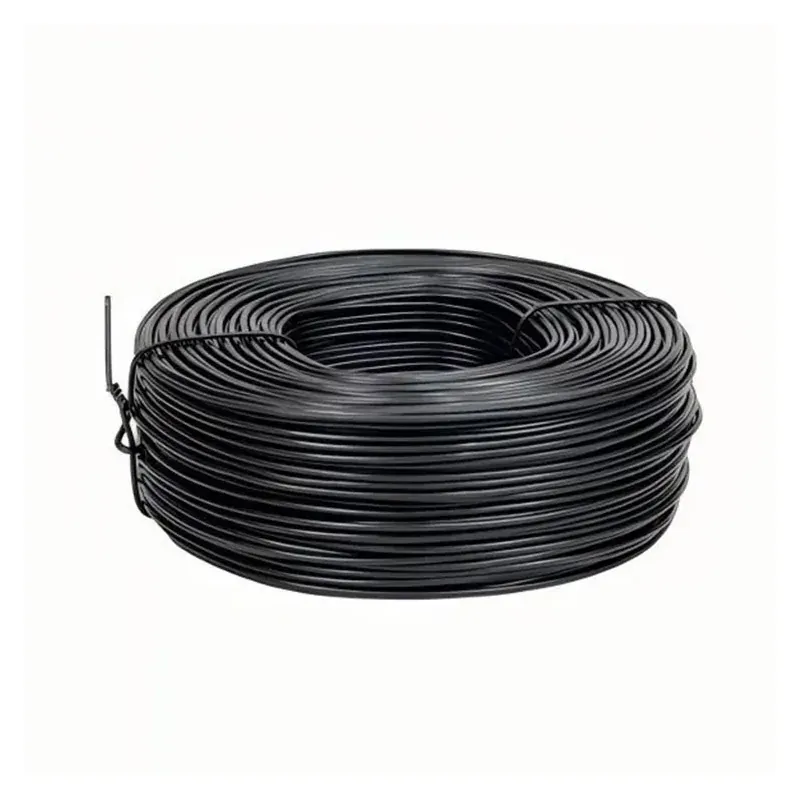
Black annealed wire — also called black iron wire, annealed binding wire or soft black wire — is low carbon steel wire that has been drawn to size and then annealed to soften it and remove the internal stress from drawing. It is the workhorse wire behind construction tying, baling, fencing, nails and wire mesh, and it is usually the cheapest of the common steel wires per ton.
The name covers a wide range of products, though. A 0.7 mm baling wire and a 3.0 mm construction tie wire are both sold as "black annealed", but they are made to different tensile strengths, with different surface treatments and different packing. This guide explains how to specify the right one, and what to send us for a quote.
What black annealed wire is and how it is made
The production route is simple but the details matter:
- Wire rod — usually Q195, Q235 or SAE 1006/1008 low carbon rod.
- Pickling and drawing — the rod is descaled and drawn through dies to the required diameter.
- Annealing — the wire is heated in a controlled furnace and cooled slowly, which softens it, restores ductility and relieves drawing stress.
- Surface — the annealed wire has a dark grey to black oxide finish; it can also be supplied bright, oiled or PVC coated.
- Packing — coils, spools or big coils according to the customer's line.
Because annealing removes the work hardening, black annealed wire bends and ties easily without snapping — which is exactly why it is used for hand tying on construction sites.
Black annealed vs bright vs galvanized wire
| Property | Black annealed | Bright annealed | Galvanized |
|---|---|---|---|
| Surface | Dark grey / black oxide | Bright, clean | Zinc coated |
| Corrosion resistance | Low — needs dry or short-term use | Low | Moderate to high |
| Softness | Soft, easy to tie | Soft | Slightly stiffer |
| Relative cost | Lowest | Low | Higher |
| Typical use | Tying, baling, fencing, nails | Plating, wire products, mesh | Outdoor fencing, mesh, gabion |
If the wire will be exposed to rain or humidity for months, galvanized is the safer choice. If it is used indoors or consumed quickly on site, black annealed gives the best cost per ton.
Grades: Q195, Q235 and SAE 1006/1008
The grade decides the base strength and how well the wire draws and anneals:
- Q195 — the most common grade for black annealed wire. Low carbon, soft, good elongation, suitable for tying and baling.
- Q235 — slightly higher carbon and strength, used where more stiffness is needed.
- SAE 1006 / 1008 — American low carbon grades, common for export markets and for wire that will be drawn further.
For most binding and baling applications, Q195 is the default. If your product needs higher tensile strength or a specific chemistry, state the grade and the standard.
Sizes, tolerances and gauge
We supply black annealed wire from 0.5 mm to 5.0 mm, with the most common export sizes between 0.7 mm and 3.0 mm.
| Diameter (mm) | Approx. BWG | Typical use |
|---|---|---|
| 0.7 | 22 | Fine baling, small coils |
| 0.9 | 20 | Baling, tying, mesh |
| 1.2 | 18 | Construction tying, baling |
| 1.6 | 16 | Fencing, tying, nails |
| 2.0 | 14 | Construction, fencing |
| 2.5 | 12 | Heavy tying, mesh |
| 3.0 | 10 | Construction, gabion frames |
Diameter tolerance is normally ±0.03 mm to ±0.05 mm. If the wire runs on an automatic machine, tell us the required tolerance — a small variation can cause feeding problems.
Tensile strength and elongation
Black annealed wire is sold by application as much as by diameter:
- Soft / binding grade — 300–450 MPa, elongation 15–25%, for hand tying and baling.
- Medium grade — 450–550 MPa, for fencing and general mesh.
- Hard drawn (not annealed) — 700–1200 MPa, for prestressed concrete and springs, not for hand tying.
If a customer complains that wire "snaps when we tie it", the cause is usually tensile strength that is too high or elongation that is too low — not the diameter. Specify the tensile range, not just the size.
Common uses of black annealed wire
- Construction — rebar tying, formwork, precast panels, scaffolding
- Baling — waste paper, cardboard, scrap, cotton, hay
- Fencing — field fence, chain link, barbed wire
- Nails and fasteners — wire nails, staples, U-nails
- Mesh — welded mesh, hexagonal mesh, chicken wire
- Agriculture — tomato support, vineyard tying, greenhouse
- Packaging — bundling, carton closing, general strapping
Coil weight, spool and packing
Packing is often where export orders go wrong:
- 10 kg / 25 kg / 50 kg coils — standard hardware and retail packing
- 25 kg spools — for automatic tying and baling machines
- 100–500 kg big coils — for factories that draw or weave in house
- Pallet or wooden case — for long sea freight and multiple handling
Tell us the coil weight, inner diameter, and whether the coil needs to be wrapped in PVC film or hessian, and we will match it to your unloading and storage.
What drives the black annealed wire price
- Wire diameter — thinner wire costs more per ton to draw.
- Grade — Q195 is cheaper than higher carbon or special chemistry.
- Tensile and elongation — tighter mechanical requirements cost more.
- Packing — spools, small coils and branded labels add cost.
- Steel price and freight — both move, so ask for a validity period.
Quality checks before shipment
- Diameter and tolerance measurement
- Tensile strength and elongation test
- Surface inspection for cracks, rust and oil
- Coil weight and packing check
- Mill test certificate and third-party inspection such as SGS on request
Common buying mistakes
- Ordering by diameter only, without a tensile range.
- Assuming "black annealed" means the same softness from every mill.
- Using black annealed wire outdoors for months and blaming the supplier for rust.
- Choosing a coil weight that does not fit the customer's machine.
- Forgetting the HS code and destination port when comparing landed cost.
Frequently asked questions
What is black annealed wire?
It is low carbon steel wire that has been drawn and then annealed to soften it. The annealing gives it a dark grey surface and makes it easy to bend and tie.
Is black annealed wire the same as black iron wire?
In practice, yes. "Black iron wire" is a trade name for the same low carbon annealed wire, usually referring to the darker oxide finish.
Can black annealed wire be used outdoors?
For short periods, yes, but it has no zinc coating and will rust. For long outdoor exposure, use galvanized wire instead.
What is the difference between black annealed and galvanized wire?
Black annealed wire is soft, dark and unprotected. Galvanized wire has a zinc coating that resists corrosion and costs more per ton.
What is the HS code for black annealed wire?
Non-alloy steel wire that is not plated or coated is usually classified under HS 7217.10. Confirm with your customs broker for your market.
What coil weight do you recommend for export?
25 kg and 50 kg coils are the most common for hardware distribution; 100–500 kg big coils suit factories. Spools are used for automatic baling and tying machines.
What to send us for a quotation
- Diameter in mm or BWG
- Grade (Q195, Q235, SAE 1006/1008)
- Tensile strength and elongation range
- Coil weight, spool or big coil
- Surface requirement (black, bright, oiled, PVC coated)
- Quantity in tons and destination port
- Any standard or certificate requirement
Next step
See our Black Annealed Carbon Steel Wire for the full range, or compare with galvanized steel wire if the wire will be used outdoors.
Email joy@ayyehui.com, message WhatsApp or WeChat on +86 173 3729 6907, or send an enquiry with your specification and quantity. We reply with price, lead time and packing options within 24 hours.