
Galvalume Steel Coil (Aluminum-Zinc Coated Coil): Coating Weight, Grades and Applications
A galvalume steel coil uses an aluminium-zinc (AZ) coating instead of pure zinc. Here is what the coating changes, how it compares with galvanized and PPGL coil, and how to specify it.
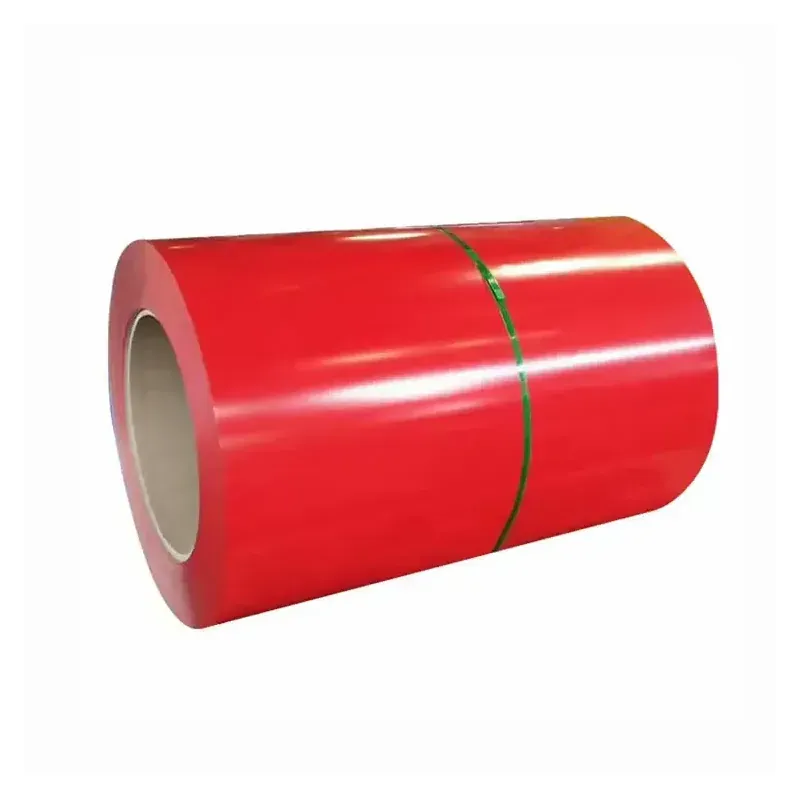
A galvalume steel coil - also written AluZinc, aluminium-zinc coated coil or AZ coil, and 镀铝锌卷 in Chinese - is a steel coil protected by an aluminium-zinc alloy coating instead of a pure zinc coating. The change looks small on a datasheet, roughly 55% aluminium, 43.4% zinc and 1.6% silicon, and it is large in service: the coating resists both the atmospheric corrosion that consumes zinc and the high-temperature oxidation that dulls a galvanized surface.
This guide explains what the coating actually does, how a galvalume coil compares with a galvanized (GI) coil and a prepainted galvalume (PPGL) coil, which grades and AZ coating weights are normally quoted, and what to send us so you get a specification you can compare line by line.
What is a galvalume steel coil?
A galvalume steel coil starts as cold rolled or hot rolled carbon steel strip, which passes through a continuous hot-dip line and comes out coated with an aluminium-zinc alloy. The coating is applied before the coil is cut, slit or roll-formed, so the finished coil arrives ready to become roofing sheet, wall cladding, sandwich panels or appliance parts with no separate coating step.
Because the coating is an alloy rather than pure zinc, galvalume behaves differently from galvanized steel in three ways that matter commercially: it lasts longer in the same environment, it reflects more heat, and it tolerates higher service temperatures. It also has one weakness you have to plan for at cut edges, which we cover below.
Common trade names for the same product include AluZinc, AZ, zincalume, GL coil and aluminium-zinc coated steel coil. If a quotation uses one of these words, ask for the coating weight and the substrate grade - those two numbers define the coil.
What the aluminium-zinc coating actually does
Zinc protects steel sacrificially: it corrodes first and shields the cut edge. Aluminium is the opposite kind of protection - it forms a dense, stable oxide layer that resists the atmosphere but does not sacrificially protect a bare edge.
Combining the two in one coating gives you both mechanisms at once. The aluminium-rich phase carries most of the atmospheric and heat resistance; the zinc-rich phase keeps enough sacrificial activity to protect small scratches and cut edges. The silicon content improves adhesion between the alloy and the steel and keeps the coating from growing an excessively brittle alloy layer during dipping.
Two practical consequences follow from that structure, and both should appear in your specification:
- Heat reflection. A galvalume surface reflects a large share of solar radiation, so a roofing sheet coated with it stays cooler than a galvanized sheet of the same colour profile. On unpainted roofing that lowers the temperature the panel itself reaches, and on painted coil (PPGL) it reduces the load on the paint film.
- Cut-edge behaviour. Because the aluminium phase does not protect sacrificially, a bare cut edge has less protection than a galvanized cut edge. In aggressive environments, plan to seal or touch up cut edges and drill holes, or specify the prepainted version so the edge condition is controlled in the factory.
Galvalume or galvanized: which one fits the job?
Neither coating is "better" in every case. The choice is normally made on environment, temperature and finish:
| Factor | Galvalume (AZ / GL) coil | Galvanized (Z / GI) coil |
|---|---|---|
| Coating composition | Aluminium-zinc alloy, typically about 55% Al and 43.4% Zn with a small silicon addition | Zinc, normally 99% or higher |
| Atmospheric corrosion life | Longer than galvanized at the same coating weight in most outdoor environments | Good, and well understood after decades of use |
| Heat reflection | High - a cooler roof surface at the same colour and profile | Lower |
| Service temperature | Suitable for high-temperature exposure when unpainted, well beyond what a painted coil can take | Lower, and zinc coating can be affected at sustained high temperature |
| Cut-edge protection | Less sacrificial protection - seal or touch up bare edges in aggressive environments | Strong sacrificial edge protection |
| Alkaline and wet-contact exposure | Needs care in strongly alkaline conditions or in contact with fresh concrete and mortar | More tolerant in mildly alkaline contact, but not in strong alkali either |
| Typical use | Roofing and cladding in hot or coastal climates, sandwich panels, high-temperature parts | General roofing, structures, ducting, water and gas pipe, galvanized frames |
As a rule of thumb: if the coil is for a hot roof, a coastal or high-rainfall site, or a part that sees elevated temperature, galvalume is usually worth the difference in price. If the coil is for general construction, for a project where cut edges will be left raw, or for a market where galvanized specification is the local norm, galvanized coil is the safer and often cheaper answer.
Grades, coating weights and dimensions
Substrate grades
The base steel determines formability and strength, not corrosion life. Commercial drawing grades such as DX51D and DX52D are the workhorses for roofing and cladding. Structural grades run from S250GD up to S550GD: a higher number means higher yield strength, which helps with long spans and load-bearing profiles, and lower formability, which matters if the coil will be profiled or bent heavily. We supply DX51D, DX52D, DX53D, DX54D, S250GD, S280GD, S320GD, S350GD and S550GD, produced to AISI, ASTM, DIN, JIS, GB or EN standards.
AZ coating weight
Coating weight is quoted as an AZ value, in grams per square metre over both faces. AZ150 means 150 g/m² of aluminium-zinc coating in total, which works out at roughly 20 µm per side. AZ100 is the light end of the range and AZ165 to AZ185 covers the heavier end used in harsh or long-life applications.
The correct starting point is the environment, not the number: a dry inland roof, a coastal façade and an industrial plant should not be quoted the same AZ coating. Tell us where the coil will be installed and the service life you are planning for.
Thickness, width and coil size
We produce coated coil from 0.3 mm to 2.0 mm thick and 600 mm to 1500 mm wide, with a cutting service from 3 mm to 1500 mm for slit coil and sheet. Coil inner diameter, outer diameter and coil weight are agreed with the order so the coil fits your uncoiler and your crane capacity.
Where galvalume coils are used
- Roofing and wall cladding - the largest application. High heat reflection keeps buildings cooler, and heavier AZ coatings are used in coastal and high-rainfall regions.
- Sandwich panels and insulated panels - the coating must accept the panel adhesive and hold colour across batches; batch-to-batch consistency matters more than maximum strength.
- Agricultural and livestock buildings - roofs and side walls where condensation and ammonia make plain galvanized steel corrode quickly.
- High-temperature parts - flues, oven linings, heat shields and similar parts where a painted coil would chalk or burn.
- Appliances and HVAC - casings, ducts and components that need a clean factory finish and a long indoor life.
- Automotive and transport components - where a lighter coating weight does the same job as a heavier galvanized coating.
PPGL: the prepainted version
PPGL is a galvalume steel coil with a paint system applied on top: a primer and one or more top coats, cured and rewound as a prepainted coil. You get the aluminium-zinc corrosion barrier plus colour, gloss and a defined surface finish, and the paint protects the cut edges and the coating from the start.
The paint choices are the same as for a prepainted galvanized coil (PPGI): PE polyester for economy, SMP silicone-modified polyester for better UV and colour retention, HDP high-durability polyester for façades, and PVDF fluorocarbon for demanding architectural and coastal projects. Front and back coating thickness are quoted separately, and the back coat is the one buyers most often forget - it protects the underside of a roofing sheet, which is the side that rusts first in a humid building.
We coat to a front thickness of 18-35 µm and a back thickness of 10-35 µm. If your project carries an architectural specification or a colour warranty, quote the paint system in the enquiry: a RAL number on its own does not define a paint system.
What to check before you order
- Substrate grade, and whether the coil will be profiled, bent or drawn - over-specifying strength reduces formability.
- AZ coating weight, chosen from the environment rather than from the price.
- Thickness and width, plus coil inner diameter, coil weight and how the coil will be uncoiled and lifted.
- Whether the coil is supplied bare (GL) or prepainted (PPGL), and if prepainted, the paint system and front and back coating thickness.
- Colour reference, gloss level and whether the colour must match an existing building or a previous delivery.
- How cut edges and drilled holes will be treated on site, especially for coastal or industrial installations.
- Whether the finished part will contact fresh concrete, mortar or another strongly alkaline material, which needs a different coating decision.
Frequently asked questions
Is galvalume better than galvanized steel?
For most outdoor roofing and cladding, aluminium-zinc coating lasts longer than a zinc coating of the same coating weight, and it reflects more heat and tolerates higher temperatures. Galvanized coil is still the better choice where a bare cut edge must protect itself sacrificially, where the local market specifies galvanized as standard, or where price is the deciding factor. The right answer depends on the environment and the edge condition, so send both and we will quote them side by side.
What does AZ150 mean?
AZ150 means the coil carries 150 g/m² of aluminium-zinc coating measured over both faces, which is roughly 20 µm of coating on each side. AZ100 is lighter and AZ165 to AZ185 is heavier. The heavier the coating, the longer the corrosion protection, and the more the coil costs.
Can galvalume steel be welded?
It can be welded, but it is less forgiving than galvanized steel because aluminium-zinc coating produces more fume and can affect weld quality if it is not removed locally first. For most roofing, cladding and panel work, mechanical fastening, clinching or adhesive bonding is the practical method; if the part must be welded, tell us at the enquiry stage so the coating and grade can be confirmed with that in mind.
Is a galvalume coil suitable for coastal projects?
Yes, and it is often chosen precisely because of salt-laden air. Coastal work needs a heavier AZ coating, a prepainted finish that seals the surface, and sealed cut edges and fasteners. Send us the distance from the shoreline and the exposure and we will recommend a coating weight to start from.
What to send us for a fast, accurate quotation
- Application and environment (roofing, cladding, panel, appliance or high-temperature part; coastal, industrial, inland or indoor).
- Steel grade, or the mechanical properties the part needs.
- Thickness (mm) and width (mm), plus slit or cut-to-length requirements.
- AZ coating weight, or the service life and environment you are designing for.
- Bare galvalume or prepainted galvalume (PPGL), with paint system and front and back coating thickness if prepainted.
- RAL colour, gloss level and any colour-matching requirement.
- Quantity, coil inner diameter, coil weight and destination port.
Next step
Send these details to Anyang Yehui Steel Company and we will come back with a specification you can compare line by line:
- Start with our galvalume-based PPGL steel coil and the color coated steel product range.
- Compare the PPGL steel coil supplied in DX51D to S550GD grades and the PPGL coil for roofing systems, or ask about corrugated PPGL coil for wall cladding.
- If you need plain AluZinc coil rather than the prepainted version, send the AZ coating weight, grade and size you require and we will confirm what we can supply.
- For the paint side of the decision, read our guide to choosing color coated steel coil (PPGI).
- Contact our sales team with your specification - most enquiries receive a detailed quotation within 24 hours by email, WhatsApp or WeChat.