How to Choose Galvanized Steel Coil: Zinc Coating, Grade and Surface Treatment
A practical guide to buying galvanized steel coil (GI / HDGI): how zinc coating weight, steel grade, surface treatment and coil size affect corrosion life, plus what to send for a fast quotation.
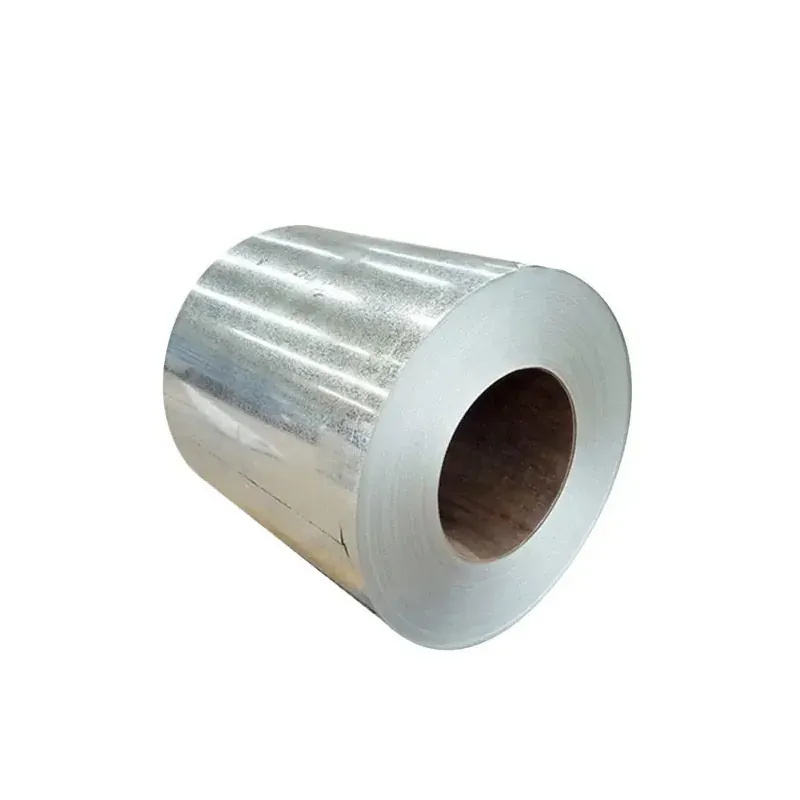
A galvanized steel coil is specified by four things: the zinc coating weight, the steel grade, the surface treatment and the coil dimensions. Everything else - price, lead time, whether the coil runs on your line - follows from those four. This guide explains what each one does, the ranges we supply from our mill in Anyang, Henan, and how to write an enquiry that gets comparable quotations from every supplier you contact.
What is a galvanized steel coil (GI)?
A galvanized steel coil - also written GI, HDGI or 镀锌卷 - is made by passing cold-rolled or hot-rolled steel through molten zinc on a continuous hot-dip galvanizing line. The zinc bonds to the steel surface and forms a protective coating.
That coating protects in two ways. It acts as a barrier between the steel and the weather, and it protects sacrificially: if the coating is scratched or the coil is cut, the zinc around the exposed steel corrodes first and keeps the steel itself intact. This is why galvanized coil is used for roofing, ducting, frames, appliances and general fabrication where bare or painted carbon steel would rust quickly.
We supply hot-dip galvanized steel (HDGI) with zinc coatings from 30 to 275 g/m², in thicknesses from 0.12 mm to 3.00 mm and widths from 100 mm to 1500 mm.
Hot-dip galvanized or electro-galvanized?
Hot-dip galvanizing produces a thicker, metallurgically bonded coating and is the standard choice for outdoor construction and roofing. Electro-galvanizing produces a thinner, smoother coating, usually for indoor parts, appliances and painted components where appearance matters more than coating weight. If a drawing simply says "galvanized", confirm which one is intended - the corrosion performance is very different.
How to choose the zinc coating weight
Zinc coating is measured in grams per square metre (g/m²), usually quoted as the total on both sides, or written as a Z value such as Z120 or Z275. Our range covers 30-275 g/m².
The rule is simple: more zinc, longer protection, higher cost. Match the coating to the environment rather than to the cheapest quotation:
- Indoor, dry, protected - a light coating is usually sufficient.
- General outdoor roofing and cladding, inland - a mid-range coating.
- Coastal, humid, industrial or chemically exposed - specify a heavy coating, and remember that cut edges, drilled holes and fixings are where corrosion starts.
Tell us the installation location, the expected service life and whether the steel will be painted later, and we will recommend a starting specification. Where the environment is aggressive, a heavier galvanized coil - or a color coated coil - often works out cheaper over the life of the building than replacing thin-coated material.
How to choose the steel grade
Grades fall into three practical groups:
Commercial and general purpose
DX51D and SGCC, along with CQ and FS, are the everyday grades for roofing, ducting, panels and general fabrication. They form and bend easily and cover most enquiries.
Structural grades
S220GD, S250GD, S280GD, S350GD and S550GD, plus SGH340-SGH540 and SGC340-SGC570, are specified when the finished part carries load or spans a distance. Higher numbers mean higher yield strength.
Deep drawing grades
DDS and EDDS are used where the steel must be formed into complex shapes without cracking.
We produce DX51D, DX52D, DX53D, DX54D, S220GD, S250GD, S280GD, S350GD, S550GD, SGCC, SGHC, SGCH, SGH340, SGH400, SGH440, SGH490, SGH540, SGCD1, SGCD2, SGCD3, SGC340, SGC490, SGC570, CQ, FS, DDS and EDDS, to EN10147, EN10142, DIN17162, JIS G3302, ASTM A653, ASTM A653M, EN10327 and EN10292, or to your own requirement.
Surface treatment: the specification most enquiries forget
Galvanized coil comes off the line with a bright surface. How it is treated before shipment decides how it behaves in storage, in forming and in later painting:
- Passivation (C) - a passivation film that reduces white rust and fingerprint marks in transit and storage.
- Oiling (O) - an oil film for extra protection during transport and forming; it must be removed before painting.
- Lacquer sealing (L) - a thin seal for specific downstream processes.
- Phosphating (P) - a pre-treatment that improves paint adhesion, useful if you will paint the part yourself.
- Untreated (U) - for lines that carry out their own pre-treatment.
- PVC, black and colour painting, transparent oil or anti-rust oil - for particular handling or appearance requirements.
We can supply all of these. If the coil will be painted, laminated or stored for a long period before use, say so in the enquiry - it changes the surface treatment, and it costs far less to specify it up front than to rework parts later.
What about spangle?
The spangle is the crystalline pattern that forms as the zinc solidifies. Some buyers want the visible spangle for a traditional galvanized appearance; others need a flatter, more uniform surface for painting or for a smooth finished part. If appearance or later painting matters, describe the surface you need in the enquiry instead of leaving it to the mill default.
Where galvanized steel coil is used
- Roofing and wall cladding - corrugated and trapezoidal sheets, purlins and flashings.
- HVAC and ducting - a smooth, paintable surface and a light coating weight are typical.
- Appliances and white goods - thinner coil, smooth surface, often electro-galvanized.
- Automotive and transport - underbody parts, brackets and panels that need corrosion resistance with formability.
- General fabrication and agriculture - frames, gates, greenhouse structures, storage equipment.
- Substrate for PPGI - galvanized coil is the base material for color coated steel coil, so the zinc specification you choose here also decides how well a painted product performs.
Six mistakes that cause most galvanized coil complaints
- Specifying zinc by price instead of by environment.
- Using galvalume, GI and PPGI as if they were interchangeable terms in a specification.
- Not stating the surface treatment, then finding white rust on arrival.
- Choosing a structural grade when the part needs deep forming.
- Forgetting that the sheet will be painted, and ordering a surface the paint will not adhere to.
- Leaving out coil inner diameter, coil weight or width tolerance, which delays production and causes handling problems at the destination.
Frequently asked questions
What is the difference between galvanized steel coil and color coated steel coil?
Galvanized coil has a zinc coating only. Color coated coil (PPGI) has the same galvanized substrate plus primer and paint. Choose galvanized when the surface will be painted later or the natural finish is acceptable; choose color coated when you need colour, appearance and a longer maintenance-free finish. That decision is covered in our color coated steel coil buying guide.
What does the Z value mean, and how does it relate to g/m²?
The Z value is a shorthand for the zinc coating weight - a higher Z number means a heavier coating and longer corrosion protection. Because suppliers quote zinc as total both sides or as a per-side coating, always confirm which basis is being used before comparing two offers.
Will galvanized coil rust?
Zinc protects the steel, but it is consumed over time - faster in coastal, humid or polluted air, and at cut edges. With the right coating weight, the right surface treatment and sensible handling, galvanized coil gives a long service life. Send us the environment and we will propose a coating weight for it.
Can galvanized steel coil be painted?
Yes, provided the surface is prepared for it. A phosphated finish or a suitable pre-treatment gives much better paint adhesion. Tell us you intend to paint and we will supply the coil with that in mind.
What is the difference between GI and HDGI?
Both describe galvanized steel. GI is the general abbreviation; HDGI makes clear that the coating was applied by the hot-dip process rather than by electro-galvanizing.
What information do you need for a quotation?
Grade, thickness, width, zinc coating weight, surface treatment, quantity, coil size and destination. With those details we can quote precisely instead of quoting with wide assumptions. Most enquiries receive a detailed quotation within 24 hours.
Send us your specification
Anyang Yehui Steel Company produces and exports galvanized steel coil from Anyang, Henan, China, with strict pre-factory inspection and test certificates. Send your requirement and we will confirm the specification, coil size and delivery schedule:
- Browse the galvanized steel products range.
- See the specifications of our DX51D Galvanized Steel Coil, S350GD Galvanized Steel Coil and S550GD Galvanized Steel Coil.
- Email joy@ayyehui.com, message WhatsApp or WeChat on +86 17337296907, or send an enquiry with your grade, thickness, width and zinc requirement.