SPCC vs SPCD vs SPCE vs DC01 vs ST12: Which Cold Rolled Steel Coil Grade Do You Need?
SPCC, SPCD, SPCE, DC01, DC02 and ST12 are cold rolled steel coil grades with different forming ability. This guide compares them, shows the equivalents and how to choose.
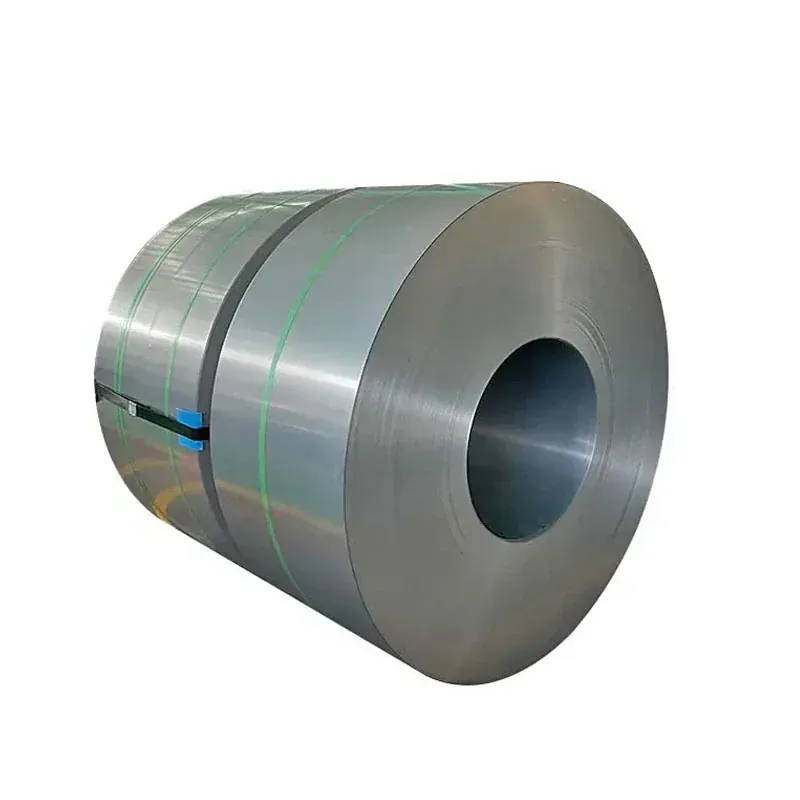
SPCC, SPCD, SPCE, DC01, DC02 and ST12 are all cold rolled steel coil, and they are not interchangeable. The grade decides how far the steel can be bent or drawn before it cracks, so ordering a commercial grade for a deep drawing job is one of the most common reasons a coil fails in production.
This guide explains what the grade designations actually mean, how the Japanese, European and German systems line up, and how to choose the right one for your part. If you are still deciding between cold rolled and hot rolled material, our cold rolled steel coil guide covers the cold rolled side and our hot rolled steel coil guide covers hot rolled.
What the grade actually controls
Two coils can share the same thickness, width and surface and still behave completely differently in a press. The grade fixes:
- Formability - how far the steel stretches before it tears, measured mainly by elongation and the r-value.
- Drawing depth - how deep a cup or panel can be drawn in one operation.
- Surface quality - how strict the limits on scratches, inclusions and surface defects are.
- Consistency - how tightly the mechanical properties are controlled from batch to batch.
Higher formability grades cost more, so the aim is to specify the lowest grade that your most difficult forming operation will survive, with a margin.
The three naming systems you will see
Cold rolled coil is quoted under three systems, and buyers often mix them up:
- JIS G3141 (Japanese) - SPCC, SPCD, SPCE, SPCF, SPCG.
- EN 10130 (European) - DC01, DC02, DC03, DC04, DC05, DC06, DC07.
- DIN 1623 (German, older) - ST12, ST13, ST14, ST15.
In all three systems the final letter or number climbs with formability, so a later letter or a higher number means the steel can be formed further before it cracks.
Grade by grade: what each one can form
Commercial quality: SPCC, DC01, ST12
These are the standard general purpose grades and are roughly equivalent to each other. They bend, fold and roll easily but are not intended for deep drawing. Typical use: shelving, cabinets, panels, ducting, general fabrication, and any part that is folded rather than stretched.
Drawing quality: SPCD, DC03, ST13
One step up, with higher elongation and a better r-value. These grades tolerate moderate drawing and stretching, such as shaped panels, housings and components with a shallow draw. If your part tears at a radius on the commercial grade, this is the first step to try.
Deep drawing quality: SPCE, DC04, ST14
Specified for parts that are drawn deeply in one or more operations: automotive panels, drums, sinks, deep housings and complex formed parts. The steel is softer, cleaner and more consistent, which is why it costs more.
Extra and ultra deep drawing: SPCF, SPCG, DC05 to DC07, ST15
The highest formability grades, used for the most severe draws and for parts that must not show stretcher strain marks. They are produced to tighter chemistry and are normally the most expensive and the least available on spot, so specify them only when the drawing really requires it.
The equivalents at a glance
- General purpose: SPCC = DC01 = ST12
- Drawing: SPCD = DC03 = ST13
- Deep drawing: SPCE = DC04 = ST14
- Extra deep drawing: SPCF or SPCG = DC05, DC06 or DC07 = ST15
These equivalents describe forming behaviour, not identical specifications. Chemistry, tolerance and surface requirements can differ between the standards, so always quote the standard you need - and if a drawing calls up a grade, send us the drawing.
How to choose for your part
- Folded or rolled parts, no stretching - SPCC, DC01 or ST12.
- Shallow drawn panels and housings - SPCD, DC03 or ST13.
- Deep drawn parts, one or more draws - SPCE, DC04 or ST14.
- Severe draws and visible drawn surfaces - SPCF, SPCG or DC05 to DC07.
- Parts to be painted or plated - any of the above, but confirm the surface finish first.
- Parts that must also resist corrosion - the same grade logic applies to the substrate; see our galvanized steel coil and color coated steel coil guides.
Surface finish, thickness and width
Besides the grade, cold rolled coil is ordered with a surface finish - typically matt or dull, bright, or extra bright - and a surface quality level. A bright finish is usual for visible parts; matt finishes take paint well and show handling marks less. Tell us whether the part will be visible, painted, or hidden inside an assembly.
We supply cold rolled carbon steel coil from 0.2 mm to 4 mm thick and 600 mm to 2000 mm wide in SPCC, SPCD, SPCE, ST12 to ST15 and DC01 to DC07, and we can slit to width or supply cut-to-length sheet instead of coil.
Common mistakes when specifying cold rolled grade
- Specifying SPCC for a part that is actually drawn, then fighting cracks in production.
- Over-specifying DC04 or SPCE to be safe, and paying for formability the part never uses.
- Treating SPCC, DC01 and ST12 as identical: the forming behaviour is similar, the specification is not.
- Forgetting the surface finish, then finding the coil too bright or too dull for the finished part.
- Leaving out the drawing or sample part, so the supplier cannot check the grade against the real forming operation.
Frequently asked questions
Is SPCC the same as DC01?
They are close equivalents for general purpose use and are often treated as interchangeable for folding and simple forming. They come from different standards (JIS G3141 and EN 10130), so chemistry and tolerance requirements are not identical - if the part is critical, specify the standard.
What is the difference between SPCC, SPCD and SPCE?
The final letter marks the forming quality: C is commercial, D is drawing, E is deep drawing. SPCE can be drawn much further than SPCC before it cracks, and it costs more.
What does ST12 mean?
ST12 is the DIN 1623 designation for commercial quality cold rolled steel, roughly equivalent to DC01 and SPCC. ST13 and ST14 step up to drawing and deep drawing quality, and ST15 is the extra deep drawing grade.
Which grade should I use for deep drawing?
Start with SPCE, DC04 or ST14. If the draw is very severe, or the surface must stay free of strain marks, move up to SPCF, SPCG or DC05 to DC07.
Can you supply a specific grade with a certificate?
Yes. Tell us the grade and the standard it has to meet and we will confirm availability. Every order is inspected before shipment and can be supplied with test certificates, and third-party testing such as SGS can be arranged.
What to send us for a quotation
- Grade, and the standard it has to meet (JIS, EN, DIN, ASTM or GB).
- Thickness and thickness tolerance, plus width.
- Surface finish and surface quality requirement.
- Coil, slit coil or cut-to-length sheet, with coil inner diameter and coil weight if these are fixed.
- Quantity in tonnes, and the destination port.
- The forming operation - ideally the drawing or the sample part - so we can confirm the grade.
Next step
Send us the part and the grade you are considering and we will confirm which one to order:
- See our SPCC Cold Rolled Carbon Steel Coil, DC01-DC07 Cold Rolled Carbon Steel Coil and Cold Rolled Carbon Steel Coil.
- Read the full cold rolled steel coil grades and specifications guide, or compare with hot rolled steel coil.
- Email joy@ayyehui.com, message WhatsApp or WeChat on +86 17337296907, or send an enquiry with your drawing, grade and quantity.