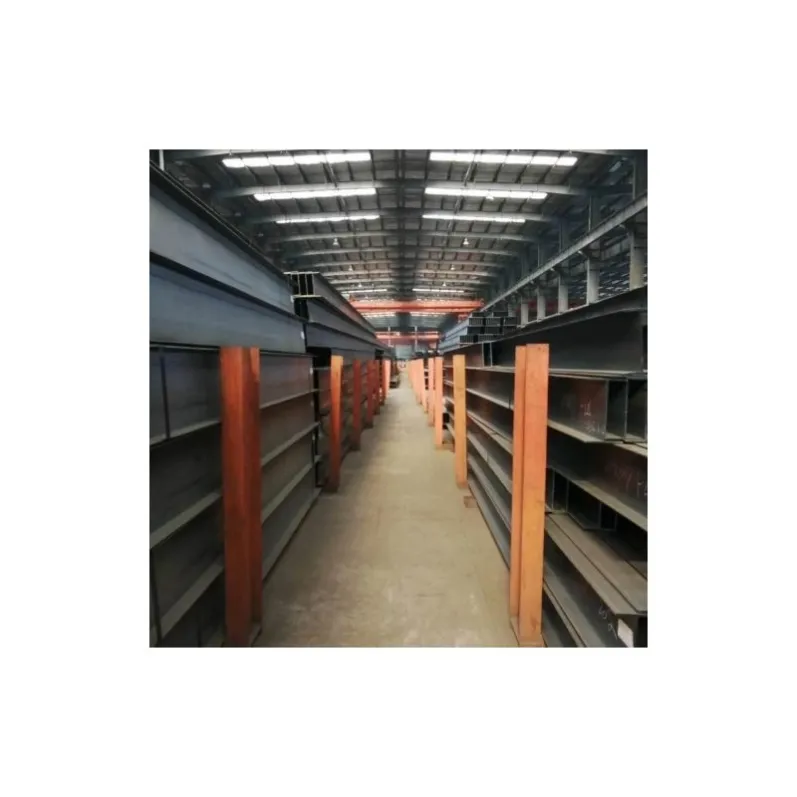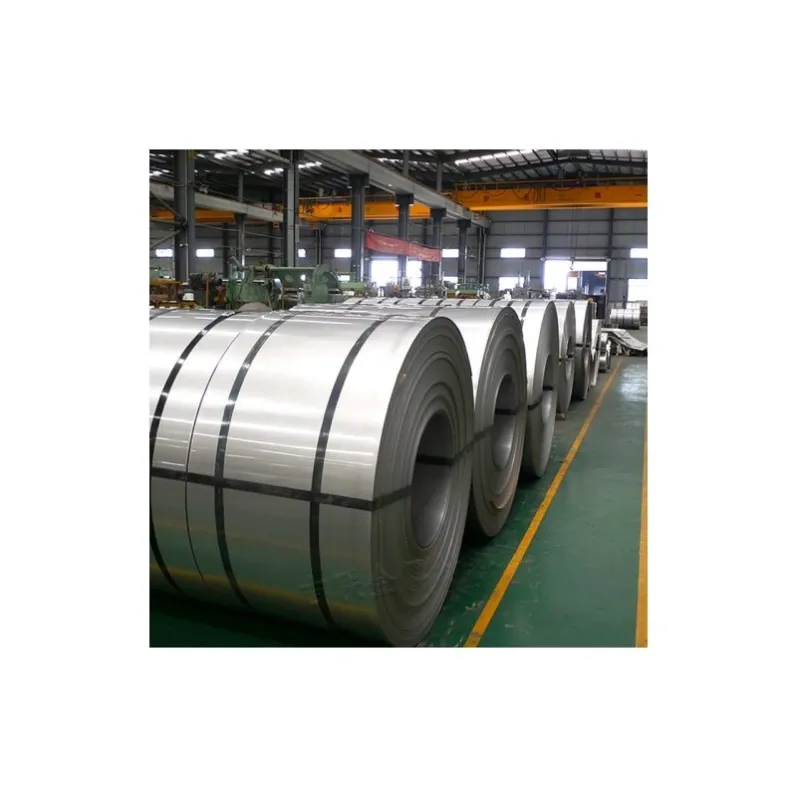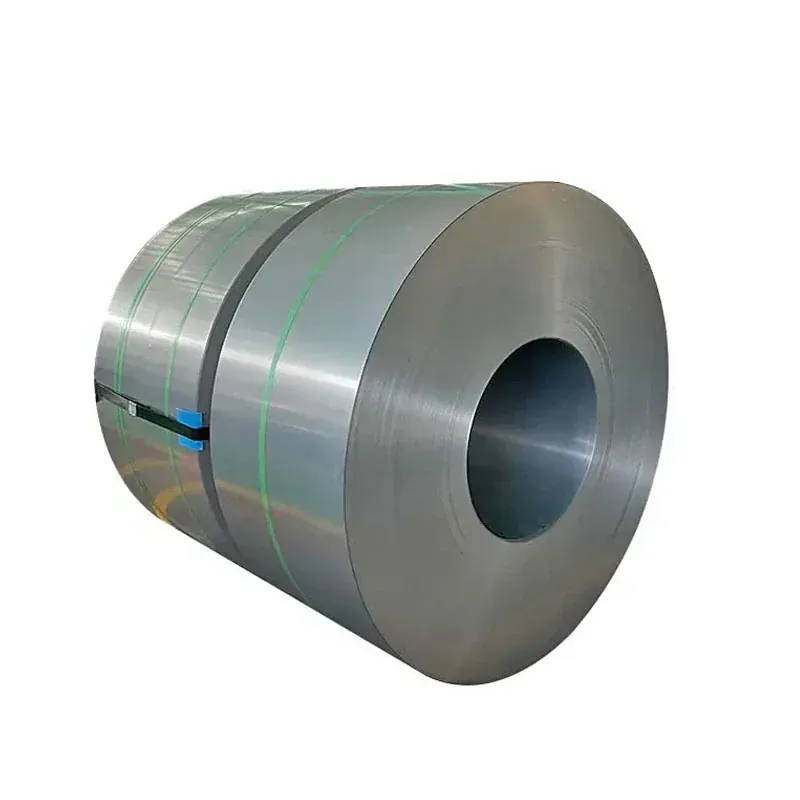
Hot Rolled Steel Coil: Grades (Q235, SS400, S235JR, A36), Thickness and Applications
Hot rolled steel coil (HRC) is specified by grade, thickness, width and surface. This guide covers Q195-Q355, SS400, S235JR, A36 and ST37 grades, the 1-25 mm range and what to send for a quote.
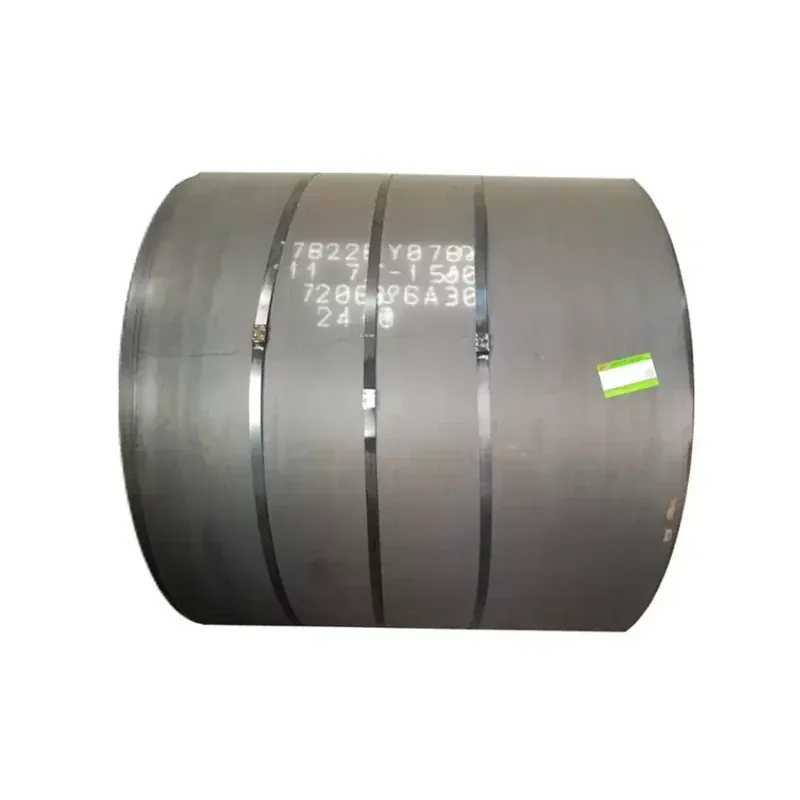
A hot rolled steel coil (HRC) is bought on four decisions: the steel grade, the thickness, the width, and the surface condition the coil arrives in. Those four decide whether the coil runs through your slitting line, your press or your welding cell without surprises - and they decide the price you pay.
This guide explains what each decision changes, the ranges we supply from our mill in Anyang, Henan, and the information to send so you receive a quotation you can compare line by line.
What is a hot rolled steel coil?
A hot rolled steel coil - 热轧卷 in Chinese - is made by heating a steel slab to above 1000 C and rolling it through roughing and finishing mills into strip, which is then coiled. Because the steel is rolled hot, the grain structure is uniform, the steel is soft and ductile, and it can be processed further without cracking.
That is why hot rolled coil is the starting point for so much of the steel trade: it becomes cold rolled coil, galvanized coil, colour coated coil, pipe, tube and profiles. If a product is described simply as "steel coil" with no coating, it is usually hot rolled.
We supply hot rolled carbon steel coil in thicknesses from 1 mm to 25 mm and widths from 600 mm to 2500 mm, produced to AISI, ASTM, DIN, JIS, GB and EN standards.
Hot rolled coil (HRC) or cold rolled coil (CRC)?
Hot rolled coil is rolled above the recrystallisation temperature, so it stays relatively thick, carries a mill-scale surface and has a looser dimensional tolerance. Cold rolled coil is hot rolled coil that has been pickled, cold rolled, annealed and flattened at room temperature, so it is thinner, smoother and much more accurate - at a higher price. The cold rolled side is covered in our cold rolled steel coil guide.
How to choose the grade
The grade fixes the yield strength and the weldability of the coil. In practice buyers choose from three families.
Structural and general purpose carbon steels
Q195, Q215, Q235, Q255 and Q275 are the GB grades used across general fabrication, and Q235 is the most common of them. SS400 from Japan, ST37 and ST52 from Germany, and S235JR, S275JR and S355JR from the EN system are the widely used equivalents that buyers outside China usually specify. A36 is the ASTM grade for structural and general engineering work. All of them weld and form easily and suit brackets, frames, base plates and general welding work.
Higher strength and low alloy grades
Q345, Q355 and S355JR give a higher yield strength for load-bearing structures, truck frames, crane booms and heavy machinery, where a lower grade would have to be made thicker to carry the same load. Where the part must also resist weather without paint, grades such as Q355NH are used.
We roll Q195, Q215, Q235, Q255, Q275, Q345, Q355, SS400, ST37, ST52, S235JR and A36, and can supply other grades to your requirement.
How to choose the thickness and width
Hot rolled coil is normally supplied from 1 mm to 25 mm thick and 600 mm to 2500 mm wide, with the exact range depending on the grade and the mill width. Thickness tolerance matters as much as the nominal figure: a coil ordered as 3.0 mm that arrives at the low end of tolerance behaves differently in a press from one at the high end. Tell us whether the thickness is critical or whether the standard mill tolerance is acceptable.
If the coil will be slit, tell us the slit widths and the coil inner diameter you need, and whether you would rather take cut-to-length sheet than coil.
Pickled and oiled (P&O) coil
Hot rolled coil comes off the mill with an oxide scale on the surface. If your process needs a clean, scale-free surface - laser cutting, painting, or a smooth finish on the finished part - ask for pickled and oiled coil. Pickling removes the scale, and the oil film protects the clean surface in transit and storage.
What surface condition means when you order
Two coils of the same grade and size can arrive looking completely different, because surface treatment is a separate choice. We can supply:
- Nude / mill finish - the coil exactly as it leaves the mill, with normal mill scale.
- Black - a dark, scale-covered surface typical of the as-rolled product.
- Oiled - an oil film that limits rust during transport and storage.
- Pickled and oiled - scale removed, then oiled, for painting or laser cutting.
- Sandblasted, painted or coated - for parts that need a finished surface before fabrication.
If the coil will be stored outdoors or shipped a long distance, say so in the enquiry. It is far cheaper to add oil or a coating than to rework rusty material at the destination.
Standards and inspection
We supply to AISI, ASTM, DIN, JIS, GB and EN standards, and can produce to your own specification. Each order is inspected before shipment and can be supplied with test certificates, and third-party inspection such as SGS can be arranged on request.
Where hot rolled steel coil is used
- Construction - structural frames, columns, base plates, purlins and general steelwork.
- Machinery manufacturing - machine frames, guards, brackets and welded assemblies.
- Shipbuilding - hull and deck structures where weldability and toughness matter.
- Container manufacturing - frames and structural parts.
- Bridges and heavy structures - higher grades such as Q355 and S355JR.
- Pipe and tube making - hot rolled coil is the feedstock for welded pipe and tube.
- As the substrate for CRC, GI and PPGI - hot rolled coil is the first step in most coated products.
Common mistakes when buying hot rolled coil
- Specifying a grade by name only, without the standard it belongs to.
- Ordering by thickness without saying whether the tolerance is critical.
- Forgetting the surface condition, then finding scale or rust on arrival.
- Choosing a low grade for a load-bearing part and compensating with extra thickness.
- Leaving out coil inner diameter, coil weight or slit width, which delays production.
Frequently asked questions
What is the difference between hot rolled coil and cold rolled coil?
Hot rolled coil is rolled at high temperature, is thicker and carries a mill-scale surface. Cold rolled coil is processed further at room temperature, so it is thinner, smoother and more dimensionally accurate, and it costs more. The cold rolled side is covered in our cold rolled steel coil grades guide.
What does HRC mean in steel?
HRC stands for hot rolled coil. In the flat steel trade it means the coil produced by hot rolling a slab, as opposed to CRC (cold rolled coil) or GI (galvanized coil).
What thickness does hot rolled coil come in?
We supply from 1 mm to 25 mm, with widths from 600 mm to 2500 mm. Below about 1 mm the material is normally supplied as cold rolled coil instead.
What is pickled and oiled hot rolled coil used for?
Pickling removes the mill scale and oiling protects the clean surface, so pickled and oiled coil is used where the steel will be laser cut, painted, or formed into a part that needs a clean finish.
Can you supply test certificates?
Yes. Every order is inspected before shipment and can be supplied with test certificates, and third-party testing such as SGS can be arranged.
What to send us for a quotation
- Grade, and the standard it has to meet.
- Thickness and thickness tolerance, plus width.
- Coil, slit coil or cut-to-length sheet, with coil inner diameter and coil weight if these are fixed.
- Surface condition: mill finish, pickled and oiled, black, oiled or coated.
- Quantity in tonnes, and the destination port.
- The application, so we can flag anything that will not work.
Next step
Send these details to Anyang Yehui Steel Company and we will come back with a specification you can compare line by line:
- See the specification of our Hot Rolled Carbon Steel Coil and A36 Hot Rolled Carbon Steel Coil.
- Compare it with our Cold Rolled Carbon Steel Coil, and read the cold rolled steel coil grades guide.
- Email joy@ayyehui.com, message WhatsApp or WeChat on +86 17337296907, or send an enquiry with your grade, thickness, width and surface requirement.